Not every big purchase is a mistake. But some purchases happen in windows where your chart is actively working against retention — Wealth element misaligned, Metal thin, Officer Fire whispering about status — and the result is a purchase you'll look at 18 months later and not remember why you made. The regret isn't mysterious. It's mechanically predictable.
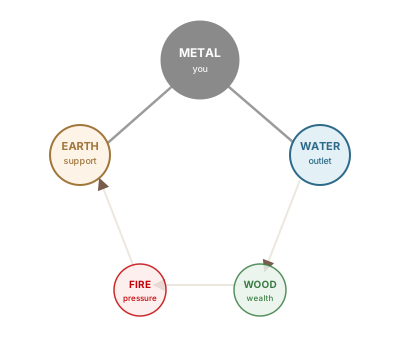
Metal is the element that filters what's worth converting wealth into. Strong, clear Metal buys less and holds more. Weak Metal, especially during specific windows, converts wealth into shapes that don't keep value — emotional, peer-pressured, self-image purchases that feel urgent and age badly.
Does any of this sound like you?
- You've rationalized this purchase at least four different ways to different people.
- You've told yourself it's an "investment" when you know it's partly a feeling.
- Your body tightens slightly when you imagine the transaction actually completing.
- A version of this purchase has been on your mind during a stressful season at work or in a relationship.
- You've been thinking about how it'll look to specific people (not just how you'll use it).
The BaZi lens: this is a wealth-window mismatch
Wealth (Wood, for Metal charts) is not always in good alignment with your day master. There are windows — months, years, even full luck pillars — when your Wealth is present but unfavorable. Purchases made in these windows convert wealth into forms that don't mature. The object may still be fine. The timing isn't.
There's also the Fire factor. Excess Officer Fire in your chart or current pillar turns purchases into status plays. The rational case for the purchase may hold up. The actual driver is wanting to be seen differently. Status purchases age badly because the status they're buying is transient.
The Five Elements
Why the urgency is loud
Purchases you don't regret tend to be quiet. Purchases you will regret are loud in your head for weeks and demand to be justified out loud. Notice which kind this is.
What's actually happening in your chart
Three patterns recur in Metal charts about to make a regrettable purchase.
One: the emotional-return mismatch. You're buying something because you want to feel differently about yourself, but the object can't deliver the feeling. The purchase works for about 96 hours, then the baseline returns. Metal knows this mismatch is happening and is trying to signal through tension you're interpreting as excitement.
Two: the "window closing" lie. The urgency narrative — "if I don't do this now, I'll lose the chance" — is almost always manufactured. Real scarcity rarely announces itself on a three-day timeline. Manufactured scarcity is a Fire pressure tactic on your Metal. Test it: if the offer vanished today, would you genuinely regret the loss in six months? For most regret-purchases, the honest answer is no.
Three: the unhappy-season spend. Many regret purchases are bought during difficult seasons — break-ups, burnout, family tension. The object becomes a substitute for the actual intervention. The chart isn't buying a watch; it's trying to feel okay. The intervention is almost always cheaper and more effective than the purchase.
When this shifts
Regrettable-purchase windows give way to better ones:
- Metal months. Monkey and Rooster — roughly August and September — sharpen discernment. Most purchases made here age well. If you're considering a big decision and can postpone to late summer, the decision will usually clarify itself by then.
- Wood-calm years. Years where Wood is present but not aggressive are when buying real assets (not status goods) pays off. These feel less urgent and more considered. The deals you'll remember warmly were mostly made in these years.
- Post-emotional recovery. Two to three months after a difficult season ends. The chart resets enough that "do I still want this?" finally returns a clean answer. The answer is almost always different from the urgent one.
What to do about it
- Run the 30-day test. If the purchase is over a month's income, delay it 30 days with no discussion and no research. If you still want it on day 31, the Fire has cooled and the Metal has spoken. If not, the urgency was the problem, not the thing.
- Ask who it's for. Not "who benefits from the object" — who are you imagining seeing you with it. If you can name a specific audience, Fire is in the decision. Fire purchases age worst.
- Strip the story. Try to describe the purchase in one sentence without adjectives, without "finally," without "deserve," without "investment." If the stripped sentence still sounds like something you want, fine. If it sounds ridiculous, that's the tell.
- Compare to a recent regret. Look at the last purchase you regretted. What was the pre-purchase pattern? If this one matches on three or more dimensions, you're running the same shape. Same shape, same outcome.
Your chart shows exactly when your wealth windows are favorable and when they're not. Run your free reading in under two minutes.
Run my free BaZi reading →